Start with the route, not a list of city names
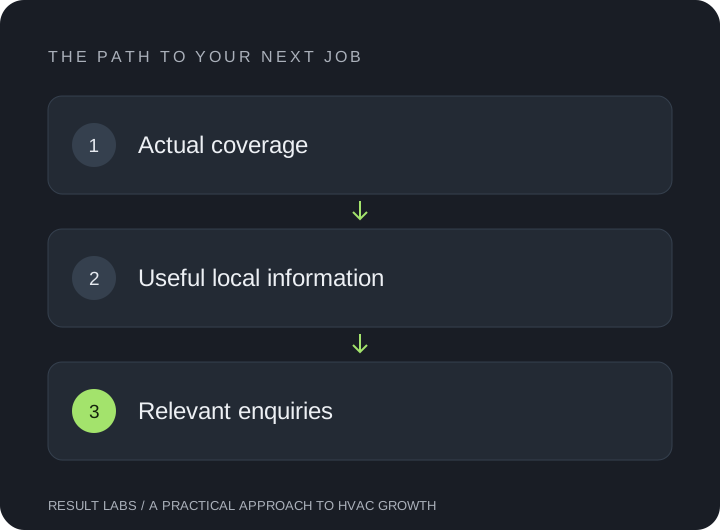
HVAC service area SEO for one location begins with the places your team can realistically cover. The outer edge may differ for emergency repair, scheduled maintenance and replacement estimates. Ask which towns produce worthwhile jobs and which journeys eat up the day. Your website should make those choices clear instead of inviting calls from everywhere.
Give each local page a reason to exist
A useful town page answers something the main service page does not. That could be actual availability, examples of completed work, coverage boundaries or recurring questions from customers in that area. Changing a city name in otherwise identical copy adds little. When you have no distinct local information, a clear coverage section may serve the homeowner better than another page.
Understand what a page can and cannot change
Google Maps results depend in part on distance. Publishing a page about another town does not create a physical office there. A service-area business should describe its real operating setup and follow Google’s profile rules. Search visibility through website pages and visibility in the map results are related goals, but they should not be sold as the same guaranteed outcome.
Build around the work you want more of
Choose a practical starting set of services and locations. Explain the customer’s problem, what you provide and how they can confirm availability. Add genuine local examples as you complete jobs and have permission to share them. On a Result Labs strategy call, bring the towns you cover and the jobs you prefer so the discussion starts with useful demand rather than a large page count.